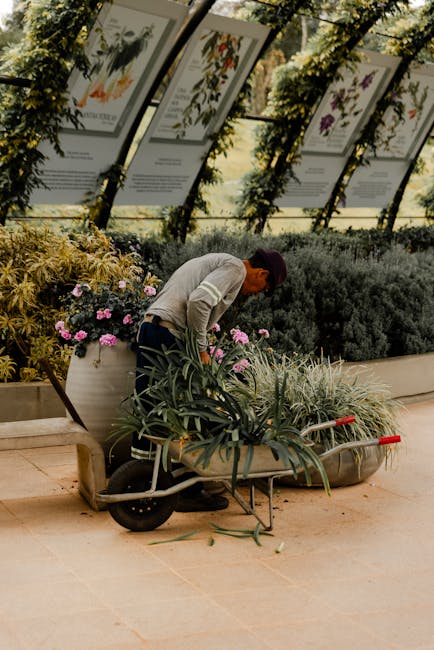
Same day gardeners Sutton availability for emergency jobs
If you have a garden problem that cannot wait until next week, you are probably looking for Same day gardeners Sutton availability for emergency jobs right now. Maybe a fallen branch is blocking access, a broken hedge has become a safety issue, or wind and rain have turned a tidy outdoor space into a bit of a mess. Let's face it, these things always seem to happen at the least convenient moment.
This guide explains how same-day garden help usually works in Sutton, what counts as an emergency, how to choose the right gardener quickly, and what to expect on the day. It is written to help you make a calm decision under pressure, not to overload you with jargon. You will also find practical tips, a clear checklist, and a few trust points that matter when you need someone who can turn up promptly and do the job properly.
Table of Contents
- Why Same day gardeners Sutton availability for emergency jobs Matters
- How Same day gardeners Sutton availability for emergency jobs Works
- Key Benefits and Practical Advantages
- Who This Is For and When It Makes Sense
- Step-by-Step Guidance
- Expert Tips for Better Results
- Common Mistakes to Avoid
- Tools, Resources and Recommendations
- Law, Compliance, Standards, or Best Practice
- Options, Methods, or Comparison Table
- Case Study or Real-World Example
- Practical Checklist
- Conclusion
- Frequently Asked Questions
Why Same day gardeners Sutton availability for emergency jobs Matters
Emergency garden work is not always dramatic, but it is often urgent. A hedge can collapse into a driveway after a gusty night. A tree branch can crack and hang low over a path. Overgrown shrubs can block visibility at an entrance, which is awkward at best and hazardous at worst. When that happens, speed matters because delay can create more damage, more stress, and sometimes a genuine access problem.
In Sutton, where gardens can range from compact front plots to larger suburban spaces, a fast response can also protect neighbours, vehicles, and boundaries. A fallen fence panel, for example, is not just an eyesore. It may expose a property, make children or pets less safe, and leave you wondering who is going to sort the mess before the weather gets worse. That is where same-day availability becomes more than a convenience. It becomes a practical solution.
There is also a trust element here. If you need immediate help, you do not want to spend all morning calling around and hearing, "We can maybe fit you in next week." You want a clear answer, a realistic arrival window, and someone who can assess the work without drama. A professional team should be able to tell you what can be done today, what needs a follow-up visit, and whether the job is suitable for urgent attendance.
For many homeowners and landlords, this kind of service also prevents minor issues becoming expensive ones. A snapped branch left in place can scratch a car, damage a roof edge, or fall again in stronger wind. A hedge that has flopped across a pavement can quickly turn into a complaint from passers-by. Fast action often keeps matters simple. Simple is good.
How Same day gardeners Sutton availability for emergency jobs Works
Same-day garden help usually starts with a quick call or message describing the issue clearly. The best outcome comes when you can explain what has happened, where the problem is, and how urgent it feels. A brief description like "large branch down across the side path" is far more useful than "garden problem, please help." The more specific you are, the better the response can be.
From there, the gardener or team will usually do a fast triage. That simply means deciding how urgent the job is, what equipment may be needed, and whether the work can be completed in one visit. Some jobs are straightforward: clearing storm debris, cutting back an overgrown hedge blocking access, or making a border safe after a collapse. Others may need extra caution, specialist tools, or more than one person.
Good emergency gardening work is not about rushing blindly. It is about arriving quickly and working safely. A decent operator will ask a few sensible questions before setting off: Is there access to the front or rear? Is the issue near power lines, glass, a shed, or a neighbouring boundary? Is there any immediate hazard to children, pets, or pedestrians? Those questions might feel slightly overcareful in the moment, but they are there for a reason.
On arrival, a professional will normally assess the site, confirm the scope, and explain the likely plan. If conditions are straightforward, work may start immediately. If the job includes hidden risks, they may suggest stabilising the area first and arranging a fuller visit later. That is not avoidance; it is good judgement.
You can also expect emergency work to be practical rather than perfect. If the goal is to restore safety and access today, the first visit may focus on removal, clearance, cutting back obstruction, and making the space manageable. Fine-tuning, shaping, or more detailed garden improvements can come afterwards. Truth be told, in an emergency nobody is usually chasing a magazine-perfect finish anyway.
Key Benefits and Practical Advantages
There are several reasons people search for same-day garden availability, and most of them are very down to earth.
- Fast safety restoration: You can remove obstructions, unstable branches, and trip hazards before they become worse.
- Reduced stress: Knowing someone is coming today is a relief when the garden feels out of control.
- Better access: Paths, gates, drives, and side returns can be cleared quickly so daily life keeps moving.
- Lower chance of secondary damage: Prompt action can reduce the chance of further breakage from wind, rain, or movement.
- Helpful for tenants and landlords: Emergency attendance can keep a property more presentable and reduce avoidable complaints.
- One point of contact: A single team can often assess, clear, and advise on the next step.
There is another less obvious benefit: a good same-day gardener can often spot the difference between a quick tidy-up and a job that needs a proper follow-on solution. That can save time and prevent repeat problems. For example, if a hedge has collapsed because of weak growth at the base, simply trimming the top may not solve the underlying issue. A trained eye helps here.
If you are comparing providers, it is sensible to look at their wider service information too. A clear services overview can show whether emergency callouts sit alongside regular maintenance, hedge care, clearance, and safety-focused work. That sort of transparency usually says a lot about how organised the business is.
Who This Is For and When It Makes Sense
Same-day emergency gardening is not for every job. If you are planning a seasonal tidy-up in three weeks, you probably do not need urgent attendance. But if something is obstructing access, creating risk, or causing active damage, it makes perfect sense.
Typical situations include:
- fallen branches after strong wind
- hedges blocking a driveway, gate, or pavement line
- broken or leaning fence sections where the garden boundary has become unstable
- fast-growing vegetation blocking sightlines near entrances
- storm debris that needs clearing before school runs, deliveries, or visitors arrive
- overgrown growth that has become difficult to manage safely
- urgent landlord or tenant requests before inspection, handover, or move-out
This service is useful for homeowners, landlords, letting agents, property managers, business premises, and sometimes elderly residents who simply need the garden made safe quickly. To be fair, not everyone has the tools, time, or energy to deal with a heavy, awkward mess on their own.
It is also worth saying that sometimes a job feels urgent because it is emotionally urgent. A garden that suddenly looks neglected or unsafe can be a source of real anxiety, especially if you are hosting family, caring for a property, or trying to restore order after bad weather. That feeling matters. It is not "just a garden" when it affects your day-to-day peace of mind.
Step-by-Step Guidance
If you need a same-day gardener in Sutton, here is the most practical way to handle it without losing time.
- Identify the urgent issue. Be specific about what has happened. Is it a branch down, an unsafe hedge, a blocked path, or general storm damage?
- Take a quick photo if you can do so safely. This helps the gardener understand the problem before arriving. Do not put yourself at risk to get a better angle.
- Check access. Make sure gates can be opened, pets are secured, and any obvious obstacles are out of the way.
- Ask about same-day availability clearly. Use direct language. "Can you attend today?" is better than a vague request for "soon."
- Confirm the likely scope. Ask what can realistically be completed on the first visit and whether extra materials or equipment are required.
- Clarify the expected cost approach. Some jobs are quoted after assessment, while others may have a callout or minimum charge. Always ask before work begins.
- Prepare the site. Move vehicles if possible, unlock side access, and keep children and pets clear of the working area.
- Review the finished area. Check that access is restored, debris is removed, and anything still needing attention has been explained to you.
A small but useful habit: keep your phone charged and your address details ready. Emergency jobs often move quickly, and the smoother your communication, the faster the help arrives. It sounds obvious, but in the middle of a messy afternoon, obvious things have a habit of vanishing.
If you are still at the comparison stage, it may help to review pricing and quotes so you know what kind of estimate process to expect before you book in a hurry.
Expert Tips for Better Results
When a job is urgent, people sometimes focus only on speed. Speed matters, yes. But the best results come from speed plus judgement. Here are a few things that help.
- Describe the risk, not just the appearance. Saying "branch hanging over the path" is more useful than "tree looks bad."
- Ask whether the work is containment or full restoration. Sometimes the first goal is simply to make the area safe, with a proper tidy later.
- Choose gardeners who talk plainly. If someone explains the situation clearly, they are usually easier to work with under pressure.
- Check safety and insurance. A professional should be comfortable discussing safe working practices and cover. If that feels awkward, that is a warning sign.
- Keep the work area visible. Good light helps in the evening, and even in daytime a clutter-free access route saves time.
- Be realistic about weather. Rain, wind, and dark conditions can affect how quickly a team can work. That is normal.
One experienced trick is to separate "must do today" from "nice to do later." You do not need to sort every leaf, every border, and every patch of moss in an emergency. Focus on the hazard, the access route, and the immediate cause. The rest can follow.
Another thing: if you know the issue may recur, ask for a brief recommendation at the end of the job. A good gardener can often suggest a better trimming rhythm, a more suitable hedge height, or a safer maintenance approach. Small advice, big difference.
Common Mistakes to Avoid
Under time pressure, it is easy to make rushed decisions. A few simple mistakes come up again and again.
- Waiting too long. If a branch is unstable or access is blocked, hoping it will settle itself is usually not the plan.
- Choosing only on speed. Fast availability is useful, but it should still come with competence and a sensible approach to safety.
- Not explaining the site properly. Missing details can delay arrival or mean the wrong equipment is brought.
- Forgetting boundaries and access points. Emergency work can stall if gates are locked or neighbours have not been considered.
- Expecting a perfect finish from a safety-first callout. A first visit may prioritise clearance and risk reduction over cosmetics.
- Skipping the follow-up plan. Some situations need a second visit. That is not a failure, just reality.
There is also a quieter mistake: not checking what happens to the waste. If a team removes a lot of cuttings, branches, or debris, ask how disposal is handled. This is part practical, part peace of mind. Nobody wants a lovely clear driveway and a heap of waste left in the corner. That would be, well, annoying.
Tools, Resources and Recommendations
For urgent garden work, the right tools matter, but so does knowing how they are used. Emergency gardeners commonly rely on a mix of cutting, clearing, securing, and transport equipment depending on the job. For a homeowner, you do not need to provide the tools, but it helps to understand what might be involved.
| Task type | Typical approach | What matters most |
|---|---|---|
| Fallen branch clearance | Cut, lift, segment, and remove safely | Access, weight, and nearby hazards |
| Overgrown hedge blocking access | Reduction, shaping, and path reopening | Boundary awareness and finish level |
| Storm debris tidy-up | Rake, collect, load, and dispose | Speed, neatness, and waste handling |
| Unsafe leaning growth | Stabilise or reduce risk before fuller work | Careful assessment and judgement |
For customers, the most useful resources are usually the practical pages on the provider's site. If you want to understand standards around safety and professionalism, review the health and safety policy and the insurance and safety information. Those pages help you see how the business handles risk, which matters a lot when work is being done quickly.
If you also want a sense of the business approach more generally, the about us page can help you judge whether the company feels local, practical, and easy to deal with. In a rush, that sort of background can be oddly reassuring.
For broader trust and service details, you may also find it useful to review contact information so you can reach the team quickly when urgent work comes up.
Law, Compliance, Standards, or Best Practice
Emergency garden jobs often seem informal, but good practice still matters. In the UK, anyone carrying out outdoor work should think carefully about safety, access, waste handling, and the impact on neighbours or public areas. The exact legal duties depend on the work involved, but the general principle is straightforward: the job should be done safely, responsibly, and without creating unnecessary risk.
For example, if garden waste is being removed, it should be handled and transported properly. If tools are being used near boundaries or shared access routes, care should be taken not to block paths or create avoidable hazards. Where ladders, cutting equipment, or heavy debris are involved, sensible precautions are essential. None of that is glamorous, but it is what separates a professional callout from a rushed improvised one.
Best practice also includes being honest about limits. If a team arrives and discovers that the issue is larger than expected, the right response is to explain the situation clearly rather than push ahead unsafely. That may mean a temporary make-safe visit, followed by a fuller plan. A good operator knows when to stop and reassess. That is a sign of maturity, not weakness.
You may also want to check how the business handles policies and customer process information. Pages such as terms and conditions, payment and security, and complaints procedure help set expectations before work begins. That is especially useful when the visit is arranged at short notice, because clarity avoids confusion later.
Finally, if sustainability matters to you, it is reasonable to ask how cuttings and waste are managed. The recycling and sustainability page can give a useful sense of that approach. Small thing, but it tells you a lot about how the company thinks.
Options, Methods, or Comparison Table
Not every urgent garden situation needs the same kind of response. Here is a simple comparison to help you think about the right approach.
| Option | Best for | Pros | Watch-outs |
|---|---|---|---|
| Same-day emergency visit | Immediate hazards, blocked access, storm damage | Fast, practical, reduces risk quickly | May focus on safety rather than full cosmetic finish |
| Next-day scheduled visit | Urgent but not critical work | More time for planning and equipment | Not ideal if the problem is getting worse today |
| Planned maintenance visit | Routine trimming, shaping, general upkeep | Usually more thorough and cost-efficient | Not suitable for active hazards |
| Make-safe first, restore later | Complex jobs or larger damage | Immediate risk reduction with follow-up clarity | Requires a second appointment |
In plain English, if the garden issue is making life difficult right now, same-day attendance is probably the right first move. If it is merely inconvenient, a scheduled visit might give better value. The trick is being honest about the difference. It saves everyone time.
Case Study or Real-World Example
Imagine a homeowner in Sutton waking up after a windy night to find a large hedge branch bent across the front path. The branch is not fully detached, but it is low enough to stop safe passage. A delivery is due that afternoon, and there is a school run to think about. The problem is annoying, but also real.
They call for same-day help and explain the situation clearly: the branch is unstable, access is blocked, and the path needs clearing before midday. A gardener asks for a couple of photos, checks access, and gives a realistic arrival window. On site, the team first makes the area safe, then removes the branch in manageable sections, clears the debris, and tidies the route so it can be used straight away.
The important bit is not that everything becomes perfectly landscaped in one go. It is that the problem stops being a problem. The homeowner can open the gate, the path is clear, and nobody has to squeeze around a dangerous branch with bags, prams, or a wet umbrella. That is the kind of result emergency garden work is really about.
It sounds simple, but there is a lot of judgement behind a good outcome: where to cut, what to leave for later, how to keep the site safe, and how to finish without making more mess. Small details, big relief.
Practical Checklist
Use this quick checklist before booking an urgent garden visit:
- Can I clearly describe the issue in one or two sentences?
- Have I taken a safe photo of the problem?
- Is there clear access to the garden or front boundary?
- Are children, pets, and parked vehicles out of the way?
- Do I know whether the job is urgent safety work or a general tidy-up?
- Have I asked what can realistically be completed today?
- Have I checked the provider's safety and insurance information?
- Do I understand how waste and cuttings will be handled?
- Have I asked about payment, terms, and any minimum charges?
- Do I know what follow-up may be needed if the problem is bigger than it first looked?
Expert summary: The best same-day garden service is not just quick. It is quick, clear, safe, and realistic about what can be achieved in one visit. If those four things are in place, you are usually in good hands.
Conclusion
When a garden issue needs attention today, the goal is simple: restore safety, access, and calm as quickly as possible. Same-day gardening in Sutton is most valuable when the work is urgent, practical, and handled by people who can assess the situation properly rather than just race through it. That balance matters.
The best decisions are usually the straightforward ones. Describe the issue clearly, check the basics, choose a provider who is open about safety and expectations, and focus on the part of the job that matters most right now. The rest can wait if it needs to. And often, that is enough to turn a stressful morning into something manageable again.
If you are ready to move quickly and want a clear next step, review the provider's service information, safety approach, and contact details before you book. A little preparation goes a long way when the clock is ticking. And honestly, it feels good when a messy situation starts to settle.
Get a free quote today and see how much you can save.
Frequently Asked Questions
What counts as an emergency garden job in Sutton?
An emergency garden job is usually anything that creates an immediate safety issue, blocks access, or risks further damage. Fallen branches, unstable hedging, storm debris, and damaged boundary areas are common examples.
Can a gardener really come out the same day?
Sometimes, yes. It depends on workload, location, travel time, and the type of job. Clear information and prompt contact improve the chance of a same-day visit.
How quickly should I contact someone after storm damage?
As soon as it is safe to do so. If a branch is hanging dangerously or a path is blocked, earlier contact usually means a better chance of a timely response.
Will same-day work include a full garden tidy?
Not always. Emergency visits often focus on making the area safe and accessible first. A fuller tidy-up may be arranged afterwards if needed.
What information should I give when I call?
Describe the issue, location, access points, any visible hazards, and whether there are pets, vehicles, or boundary concerns. Photos help if they can be taken safely.
Is same-day gardening more expensive than a planned visit?
It can be, because urgent attendance may involve a faster response and less flexible scheduling. The exact pricing depends on the job, access, and materials involved, so it is best to ask for a clear quote process.
Do I need to stay at the property during the visit?
That depends on access and the provider's arrangements. Some jobs can be completed with clear instructions and access, while others benefit from someone being present to confirm the scope.
How do I know if the gardener is safe and insured?
Check that they are comfortable discussing safety practices, equipment, and insurance. A professional team should not be vague about these basics. If they are, that is worth noting.
Can emergency gardening help with overgrown hedges blocking the pavement?
Yes, if the hedge is creating a practical obstruction or safety concern. The work may involve reducing growth, restoring access, and removing cuttings so the area is usable again.
What happens if the job turns out to be bigger than expected?
A good gardener should explain the situation clearly and suggest the safest next step. That might mean a make-safe visit today, followed by a more complete appointment later.
Do gardeners remove the waste after clearing emergency debris?
Usually, yes, if waste removal is included in the service. It is sensible to confirm this before work starts so you know what is being taken away and what remains on site.
How do I book urgent garden help without wasting time?
Keep your message short but specific, include a photo if possible, confirm access, and ask directly about same-day attendance. Clear communication speeds everything up, which is exactly what you want when the day has already gone sideways.